


How to know an online slots site is properly licensed
When you play slots online, the license that backs a casino is one of the simplest and most powerful indicators of safety. A valid gaming license shows that a regulator has assessed the site’s operations, financial safeguards, and commitment to player protections. You should make license checks a routine part of choosing any new site.
Start by locating licensing information in the site footer or on an “About” or “Legal” page. Reputable operators display the regulator’s name, license number, and a link to the licensing authority’s website. Common respected regulators include the UK Gambling Commission (UKGC), the Malta Gaming Authority (MGA), the Gibraltar Regulatory Authority, and similar national bodies. While some jurisdictions (for example, Curacao) issue many licenses, they vary in the strength of player protections they provide—so knowing the regulator’s reputation matters.
What to verify about a license
- License number and regulator name: Confirm these match the details on the regulator’s official database.
- Jurisdiction and legal reach: Check whether the license covers players from your country.
- Terms of player protection: Look for responsible gaming policies, KYC procedures, and complaint mechanisms.
- Financial safeguards: See if the operator mentions segregated accounts or insolvency protections.
If anything is missing or the license details don’t validate on the regulator’s website, treat the operator with caution. You can also search for past regulatory actions, sanctions, or public complaints against the license holder—these are often documented on regulator portals or industry news sites.
Why RNGs and independent fair-play checks are critical for slots
Random Number Generators (RNGs) determine the outcome of online slot spins. A properly implemented RNG ensures each spin is independent, unpredictable, and free from manipulation. Without a verifiable RNG and independent testing, you’re essentially trusting the operator’s word that the games are fair.
Independent testing labs (also called certification bodies) such as eCOGRA, iTech Labs, and GLI audit RNGs, game mathematics, and payout percentages. When a testing lab signs off on a game or casino, they typically publish a certificate or testing report that you can view. These reports describe the testing scope, sample sizes, and whether the RNG passed statistical randomness tests.
How you can confirm fair play
- Look for testing lab seals on game pages or in the site footer and click through to the test certificate.
- Check the stated RTP (return to player) figures for individual slots versus audited ranges provided in test reports.
- Verify the reputation of the game provider—established providers (NetEnt, Microgaming, Pragmatic Play, etc.) are less likely to deliver rigged games.
- For crypto-focused sites, review whether they offer provably fair algorithms and explain how to verify individual outcomes.
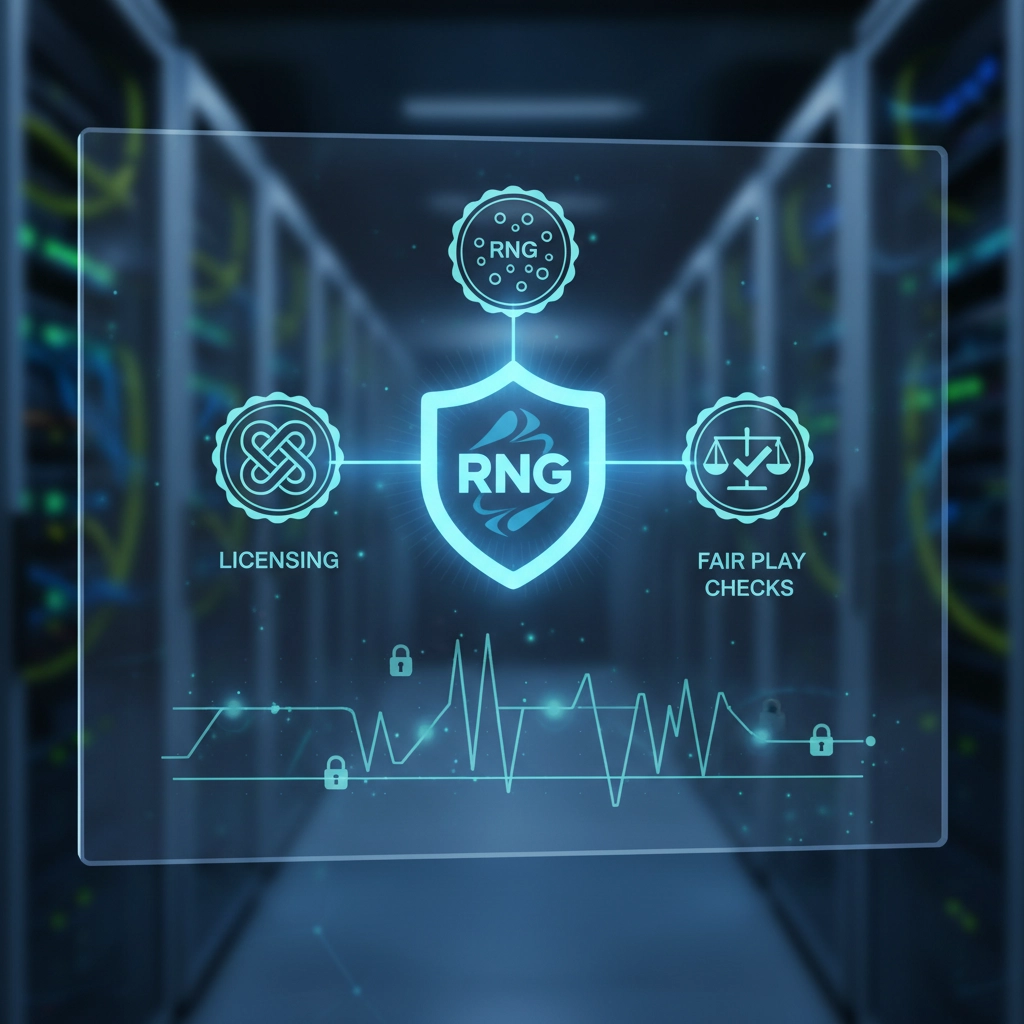
By combining license verification with RNG and audit checks, you reduce the risk of unfair play and protect your bankroll. In the next section, you’ll get step-by-step actions to verify licenses, check RNG certificates, and interpret audit reports on any casino site.
Step-by-step: verify a license, read RNG certificates and interpret audit reports
Follow this checklist when you evaluate a new casino or suspect a game’s fairness. Work through the items in order—each step gives you additional evidence to trust (or avoid) an operator.
- Find the licensing details: open the site footer or Legal/About page, copy the regulator name and license number, then visit the regulator’s official site and search their license database. Confirm the license status, issue and expiry dates, and the operator’s registered company name.
- Confirm jurisdiction coverage: verify the license actually permits service to players in your country. Some licenses restrict markets even if the operator displays their seal.
- Locate testing lab seals and certificates: click seals from iTech Labs, GLI, eCOGRA or equivalent. A genuine certificate is usually a PDF specifying what was tested—RNG algorithms, RTP ranges, and sample sizes—and the date of testing.
- Read the report summary: check what was covered (single game vs whole platform), the RTP ranges tested, and whether the RNG passed statistical randomness tests. Older certificates matter less; prefer recent audits or recurring test schedules.
- Compare stated RTPs: on the game’s info page confirm the published RTP and see whether it falls inside the audited range. Big discrepancies are a red flag.
- Check provider reputation: verify the game vendor’s website lists the titles and whether that vendor has its own audit history. Established suppliers publish their audits and have visible partnerships with major casinos.
- For provably fair games: follow the site’s verification process—check the server seed hash, client seed, and the algorithm explanation. Use the site’s verifier or a third‑party tool to reproduce outcomes for a few spins.
- Keep records: save certificate PDFs, screenshots of license pages, and any correspondence. These are essential if you need to escalate a complaint.
Red flags, immediate actions and how to escalate problems
Even with checks, issues sometimes arise. Know the common warning signs and the practical steps to protect your money and push for a resolution.
- Common red flags: missing or unverifiable license, no independent audit seals, unclear RTPs, outdated or single-game certificates, wildly inflated RTP promises, long or denied withdrawals, opaque T&Cs, and identical content across sites with different names.
- Immediate actions: stop depositing, try to withdraw any remaining balance, and document everything (screenshots, URLs, timestamps, the exact text of messages). If withdrawals are blocked, don’t keep money tied up—contact your payment provider about disputing transactions if necessary.
- Contact support, then the regulator: open a formal support ticket and note the case number. If support is unhelpful or evasive, file a complaint with the licensing authority (include license number, evidence, and correspondence). Regulators take documented complaints seriously and may mediate or sanction operators.
- Escalate via payment channels and community watchdogs: use chargebacks or disputes with your bank or e‑wallet if you suspect fraud. Share details on reputable player forums and watchdog sites; other players’ experiences can reveal wider patterns.
- Report to game providers and testing labs: if you believe specific games are manipulated, alert the software provider and any testing lab whose seal appears on the site—they will investigate mismatches between certified outcomes and live play.
Proactive checks plus quick, documented responses will minimize your risk and increase the chance of recovery if something goes wrong. In the next part you’ll get guidance on safe bankroll and account management practices to complement these checks.

Staying safe while playing online slots
Playing responsibly means treating safety checks as ongoing habits rather than one-off tasks. Keep your account security and bankroll controls current, re-check license and audit details before trying a new site, and save evidence of important transactions and communications. If you rely on a particular regulator or testing lab for trust, bookmark their verification pages and revisit them periodically to confirm a site’s status.
- Use strong, unique passwords and enable two-factor authentication where available.
- Set deposit and loss limits and review them regularly to keep play within your budget.
- Keep copies of license screenshots, audit certificates, and support correspondence so you can escalate quickly if needed.
- When in doubt, consult regulator pages (for example, check the UK Gambling Commission’s public register at Gambling Commission) or contact a testing lab shown on the site for verification.
Make safe-play routines part of how you choose and use online casinos. That ongoing vigilance — combined with the checks covered earlier — gives you the best chance of enjoying slots without unnecessary risk.
Frequently Asked Questions
How can I quickly confirm a casino’s license is real?
Find the license name and number on the casino site (footer or Legal page), then search the regulator’s official public register to match the license number, operator name, and current status. If details don’t match or the regulator has no record, treat the site with caution.
What does an RNG certificate prove and where should I find it?
An RNG certificate from an independent lab confirms the randomness tests and often lists RTP ranges and the scope of testing. Look for testing-lab seals on game pages or the site footer and click through to the published PDF or report. Verify the certificate date and whether it covers the whole platform or only specific games.
My withdrawal is delayed or blocked — what steps should I take first?
Document everything (screenshots, timestamps, ticket numbers), contact support formally and keep the case reference, then escalate to the licensing authority if support is unhelpful. Also notify your payment provider about disputed transactions and consider sharing details on reputable player forums to see if others have similar issues.